Ministers of Justice & Health Welcome Landmark Report on Drug-Related Intimidation

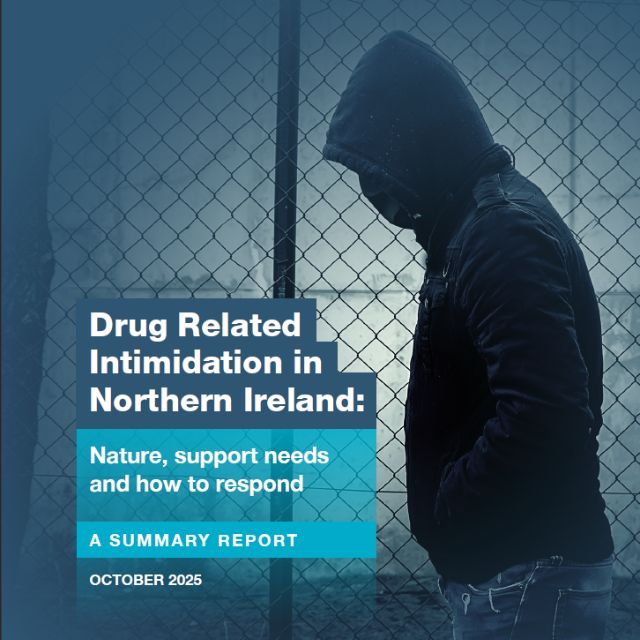
The Ministers of Justice and Health have welcomed the publication of today’s landmark report on Drug-Related Intimidation (DRI) in Northern Ireland, which offers the most comprehensive analysis to date of the nature, prevalence and impact of DRI across the region.

The report, produced by the Public Health Agency and commissioned by the Executive Programme on Paramilitarism and Organised Crime (EPPOC), reveals the widespread and complex nature of DRI, which affects individuals, families, and entire communities.  The report reveals that:

  • Nearly 40% of the general population are aware of suspected or read DRI occurring in their community;
  • One in eight reported direct experience in the last three years. 

The findings highlight the harms caused by the often complicated relationship between drug debt, organised crime, paramilitary groups, and social vulnerability.  It portrays the devastating effects of intimidation on young people, families, and communities, and outlines the urgent need for a coordinated, cross-sectoral response.

Speaking today, Justice Minister Naomi Long, and lead Minister for the Executive Programme on Paramilitarism and Organised Crime said:

“Drug-related intimidation is a deeply corrosive force in our society. It preys on vulnerability, fuels fear and undermines the very fabric of our communities. This report lays bare the scale and complexity of the challenge we face, and it demands action.


“As Minister of Justice, I am committed to working with all sectors including health, housing, education, and community organisations to deliver a joined-up response”.


The Minister also praised the voices of victims, families, and frontline workers featured in the report:

“Their courage and insight must guide our policy and practice. We must confront the stigma that isolates victims and perpetuates harm. It is no easy task but together, we can build a Northern Ireland where drug related intimidation and its pernicious effects have no place”.

Also speaking at the event, Health Minister Mike Nesbitt said: “Substance use has a real and lasting impact on individuals, families, and communities right across Northern Ireland. Not only are there the direct mental and physical harms, but people who use drugs often face stigma, prejudice, and intimidation – and we know this causes further harm as fewer people come forward for treatment and support. These issues are often unseen and unaddressed, leading to a spiral of substance use, exploitation, and being pulled into criminal activity.

“This collaborative scoping study, for the first time, brings together information, statistics, and, importantly, lived experience of drug related intimidation. The output should be compulsory reading for all across Government. This is only the start of the journey, we now need to use it to inform our collective response, and plans are underway to consider how best to embed a holistic and compassionate response.”
Please click here to download the report.

New posters launched to strengthen Ending the Harm campaign

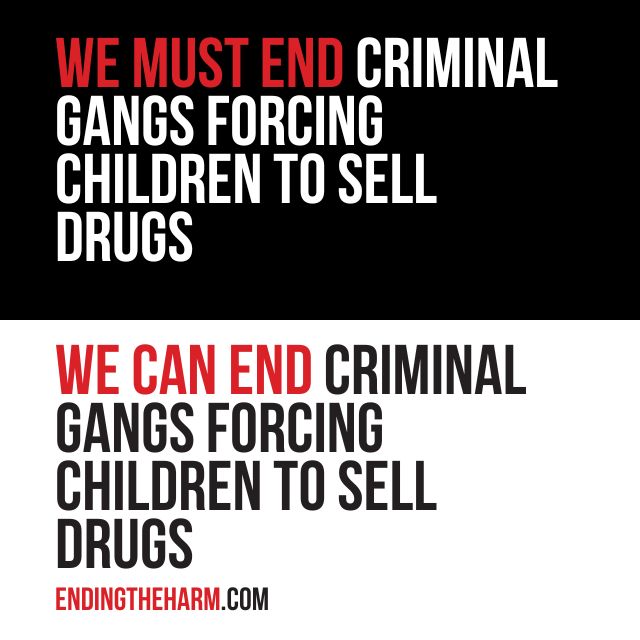
A new series of posters have been launched as part of the Executive Programme on Paramilitarism and Organised Crime’s ongoing ‘Ending the Harm’ campaign.

They highlight the ongoing need to tackle paramilitary and criminal gang exploitation in local communities.

The latest posters introduce a two-part message: ‘We must end – We can end’, a reference to the positive impact and change in communities that has come from EPPOC projects, initiatives and interventions.

For the first time, the campaign explicitly references both ‘Criminal Gangs’ and ‘Paramilitaries’, acknowledging the diverse perspectives on how such organisations are described. From Monday 20 October, posters will be displayed across a wide range of outdoor advertising sites as well as featuring online and on social media.

Justice Minister Naomi Long said:

“Paramilitary groups and criminal gangs exploit, intimidate and harm our communities. They are not defenders or protectors, they are criminals. The new posters make it clear that, whatever name they use, their actions are unacceptable and must end. However, the work delivered by the Executive Programme on Paramilitarism and Organised Crime has shown that we can end this harm and together, we can build safer, stronger communities for everyone.”


Campaign to highlight paramilitary harms is making a difference

The Ending the Harm public awareness campaign is actively changing perceptions about the harms perpetrated by paramilitary gangs in Northern Ireland. This was the clear message from the publication of new market research insight into the public awareness campaign by the Executive Programme on Paramilitarism and Organised Crime.


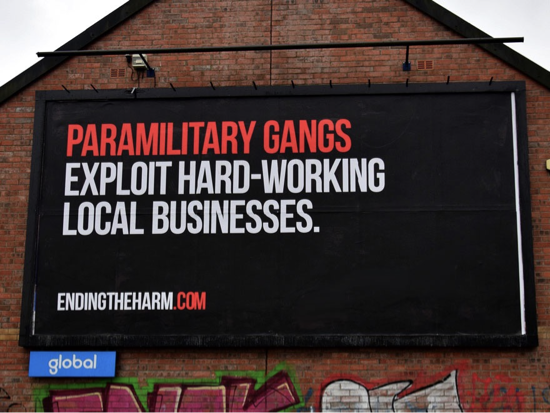
The current Ending the Harm campaign was launched in October 2024 and gives a name to the many ways that paramilitaries exploit vulnerable people. It helps to raise awareness and encourage the difficult conversations that are vital to keep people safe from the harm caused by paramilitary gangs. It has appeared in communities right across Northern Ireland and is also present on bus advertising, giving us further visibility in geographical areas where there may be a lack of advertising space. You can view the posters here.


In December 2024 campaign tracking research was undertaken for the campaign. Approximately 1,000 people were surveyed through an Online Omnibus Survey, with the sample being representative of the Northern Ireland adult (18+) population. The survey results have shown that 77% of respondents regarded the campaign as believable, 66% of respondents thought it was impactful and 89% of respondents fully supported what the campaign was saying and trying to do.


The research has highlighted that the majority of respondents agreed with the campaign statements that paramilitary gangs:


  • Controlled communities with violence, intimidation and drug dealing (67%)
  • Exploited hard-working local businesses (65%)
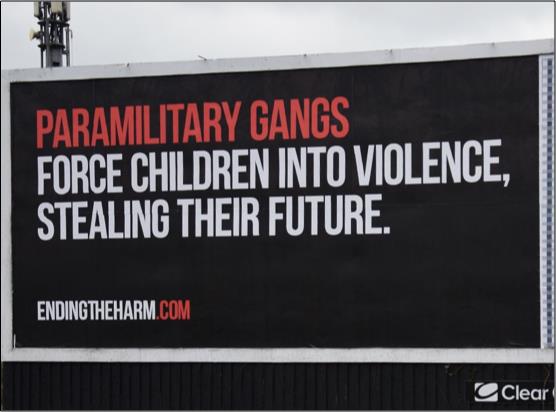
  • Forced children into violence, stealing their future (63%)
  • Robbed businesses by taking their hard-earned money (61%)
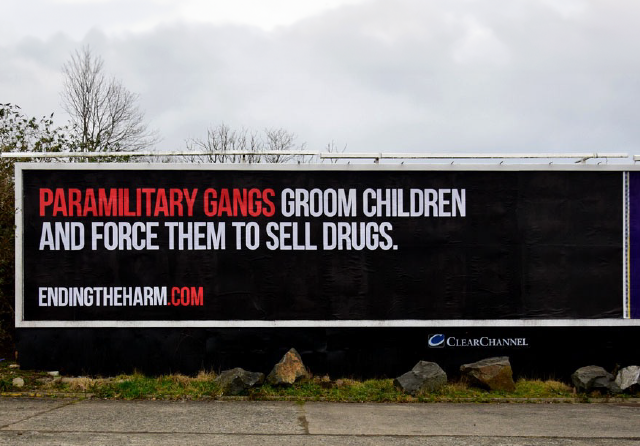
  • Groomed children to force them to sell drugs (59%)


Agreement with the campaign statements was higher with respondents who were already aware of the campaign verses those who were looking at the posters for the first time, helping to validate the importance of this campaign to highlight a range of ‘hidden’ paramilitary harms.


Finally, the impact of the campaign on respondents was both significant and powerful, with the majority in agreement that ‘paramilitaries are just criminals’ (79%), ‘there was no place for paramilitary gangs in Northern Ireland’s future’ (77%), ‘paramilitaries don’t protect you, they intimidate their own communities’ (76%), and they exploit women and children (69%).


You can view the survey report here.