The Fresh Start through Sport Pilot Programme – evaluation report

In October 2020, Ulster University (UU) was commissioned by the Irish Football Association (IFA) on behalf of the Department for  Communities to conduct an evaluation of the Fresh Start Through Sport (FSTS) pilot programme across three phases. 
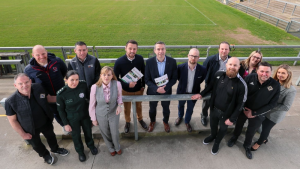
 

The core research team consisted of Dr Brendan Coyle, Dr Conor Murray, Dr Gavin Breslin, and Dr Colm Walsh. The evaluation was assisted by public agencies, community organisations, the IFA and their sporting partners – Belfast Giants, Ulster Rugby, and the GAA. They provided advice on the direction of the evaluation and participated in in-depth semi-structured interviews. Young people that participated in the Fresh Start Through Sport programme also assisted the evaluation by sharing their experiences in focus groups
and semi-structured interviews.


Click here to download the full report.
Developing Women in the Community: A formative pre/post evaluation

Findings from the 2020/21 NI Safe Community Telephone Survey

The Department of Justice (DoJ) has published the Research and Statistical Bulletin ‘Findings from the 2020/21 Northern Ireland Safe Community Telephone Survey’ (NISCTS).


An Official Statistics publication, the bulletin focuses on key modules contained within the NISCTS relating to:

  • experience of crime
  • perceptions of crime
  • perceptions of policing and justice
  • perceptions of organised crime


KEY FINDINGS

  • Results from the 2020/21 NISCTS indicate that most adults/households did not experience a crime asked about in the survey. Latest findings estimate that 3.9% of adults/households were victims of at least one crime measured through the survey during the 12 months prior to interview.
  • Respondents were more positive in their perception of crime trends in their local area than at the regional level with 25% believing local crime levels had increased in the preceding two years compared with 55% for Northern Ireland as a whole.
  • One-in-ten (10%) respondents expressed a high level of worry about burglary with a similar proportion, 8%, very worried about becoming a victim of violent crime.  Of vehicle owners, 5% were very worried about becoming a victim of car crime.
  • Overall public confidence in the police and police accountability arrangements in Northern Ireland as a whole (based on a seven-strand composite measure) was 86% in 2020/21.
  • In terms of the local police, findings suggest that 62% rated their local police as doing an excellent or good job. When asked about overall confidence in their local police, three-in-four (75%) respondents stated that, when taking everything into account, they had confidence in the police in their area.
  • Two-in-three (67%) respondents were very or fairly confident that the criminal justice system as a whole in Northern Ireland is effective while almost three-in-four (73%) felt it was fair.
  • Just over one-in-five (21%) participants considered organised crime to be very or fairly widespread in their local area with a quarter of respondents (25%) believing the level of organised crime had increased in their area over the previous 12 months. 
  • In terms of paramilitary activity, 15% felt it was widespread in their area. Of those who responded it occurred, more than four-in-five (83%) felt there were either strong or some links between paramilitary activity and ongoing organised crime.
  • Of respondents who considered paramilitary groups to have influence in their area, 45% considered it as a ‘negative’ influence, while a further 31% felt the influence was ‘more negative than positive’. 


To view the reports please click here.