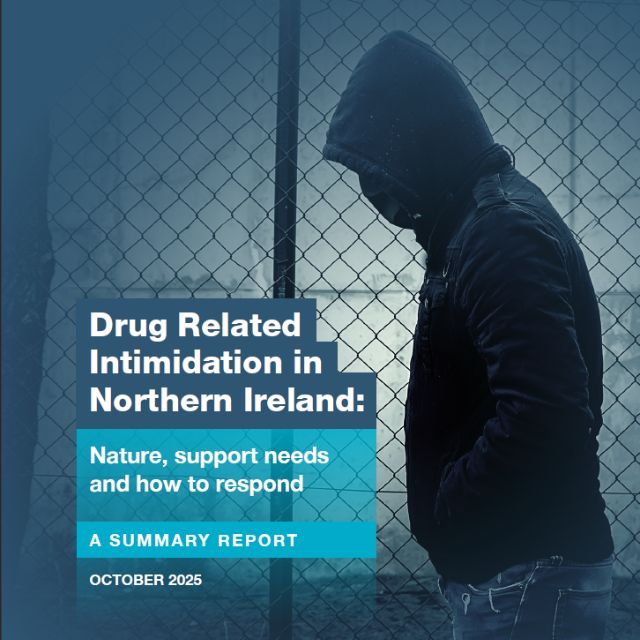
The Ministers of Justice and Health have welcomed the publication of today’s landmark report on Drug-Related Intimidation (DRI) in Northern Ireland, which offers the most comprehensive analysis to date of the nature, prevalence and impact of DRI across the region.
The report, produced by the Public Health Agency and commissioned by the Executive Programme on Paramilitarism and Organised Crime (EPPOC), reveals the widespread and complex nature of DRI, which affects individuals, families, and entire communities. The report reveals that:
- Nearly 40% of the general population are aware of suspected or read DRI occurring in their community;
- One in eight reported direct experience in the last three years.
The findings highlight the harms caused by the often complicated relationship between drug debt, organised crime, paramilitary groups, and social vulnerability. It portrays the devastating effects of intimidation on young people, families, and communities, and outlines the urgent need for a coordinated, cross-sectoral response.
Speaking today, Justice Minister Naomi Long, and lead Minister for the Executive Programme on Paramilitarism and Organised Crime said:
“Drug-related intimidation is a deeply corrosive force in our society. It preys on vulnerability, fuels fear and undermines the very fabric of our communities. This report lays bare the scale and complexity of the challenge we face, and it demands action.
“As Minister of Justice, I am committed to working with all sectors including health, housing, education, and community organisations to deliver a joined-up response”.
The Minister also praised the voices of victims, families, and frontline workers featured in the report:
“Their courage and insight must guide our policy and practice. We must confront the stigma that isolates victims and perpetuates harm. It is no easy task but together, we can build a Northern Ireland where drug related intimidation and its pernicious effects have no place”.
Also speaking at the event, Health Minister Mike Nesbitt said: “Substance use has a real and lasting impact on individuals, families, and communities right across Northern Ireland. Not only are there the direct mental and physical harms, but people who use drugs often face stigma, prejudice, and intimidation – and we know this causes further harm as fewer people come forward for treatment and support. These issues are often unseen and unaddressed, leading to a spiral of substance use, exploitation, and being pulled into criminal activity.
“This collaborative scoping study, for the first time, brings together information, statistics, and, importantly, lived experience of drug related intimidation. The output should be compulsory reading for all across Government. This is only the start of the journey, we now need to use it to inform our collective response, and plans are underway to consider how best to embed a holistic and compassionate response.”